AI-POWERED
CREATIVE SYSTEM
ROLE
Creative Strategy, AI Systems, Workflow Design
TYPE
Internal Tool, 2026
I GAVE NON-DESIGNERS AN AI DESIGN TOOL TO PROTECT THE ROLE OF DESIGNERS.
It sounds backwards. That’s exactly the point.
Raise your hand if you have been personally victimized by the following workflow:
Project brief → design → revisions → revisions → revisions → REVISIONS → confusion → frustration → burnout →“I’ll just make it in Word.”
This isn’t a design problem. It’s a communication gap.
I wanted to break the reactive service-department loop and give everyone in the company access to design as a core business competency. Not by turning everyone into a designer, but by helping them think more clearly about what they were actually trying to accomplish.
The AI won't design for you. Human engineering will always reign supreme. But it gives everyone the same easy way into the creative process, turning scattered requests into a shared language between Design and the rest of the business.
THE PROBLEM
Creative teams lose time when design begins with a requested deliverable instead of a clearly defined problem. That creates unnecessary revision cycles, puts designers too late in the conversation, and leaves non-designers without a useful way to articulate what they actually need.
THE OPPORTUNITY
The opportunity was to give non-designers a better way to articulate what they needed before execution began. The system could raise the quality of everyday internal work while creating a clearer path into the design team when human creative expertise was needed.
THE SYSTEM
We developed the creative strategy and framework for an AI system with two distinct paths. Draft Mode helps teams create stronger internal work within the brand system. Wireframe Mode turns external-facing ideas into structured content, a visual starting point, and a clearer brief for a designer to finish.
FROM REQUEST TO DIRECTION
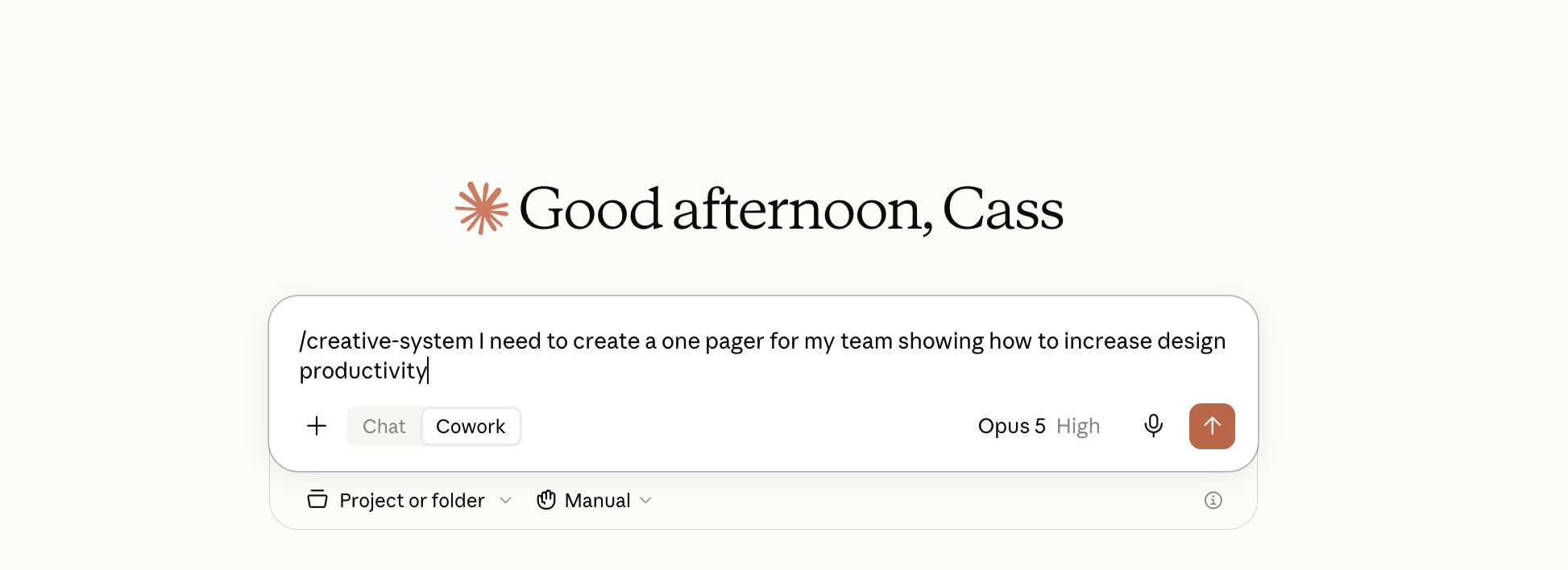
You don't need to know how to brief a designer. Just tell the system what you're trying to do.
GUIDED DISCOVERY
This is where the tool becomes the new easy.
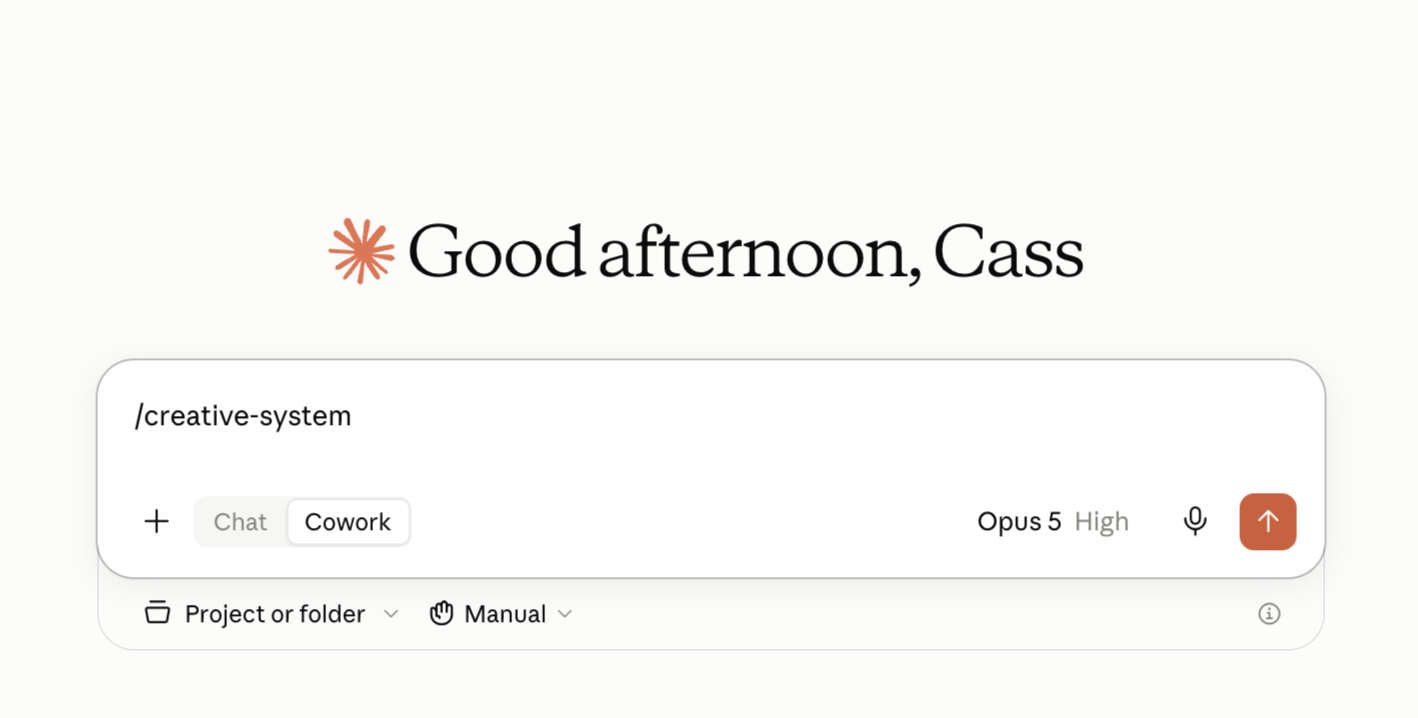
The system guides everyone through the same strategic framework with a series of questions. The questions adapt to the request, helping people articulate what they're making, who it's for, what it needs to accomplish, and what kind of creative support it actually needs.
Internal projects can move toward a usable solution faster. External-facing projects arrive at Design better equipped to support elite creative outcomes, not just a file.
Any project. Any department. One unified way to communicate with Design.
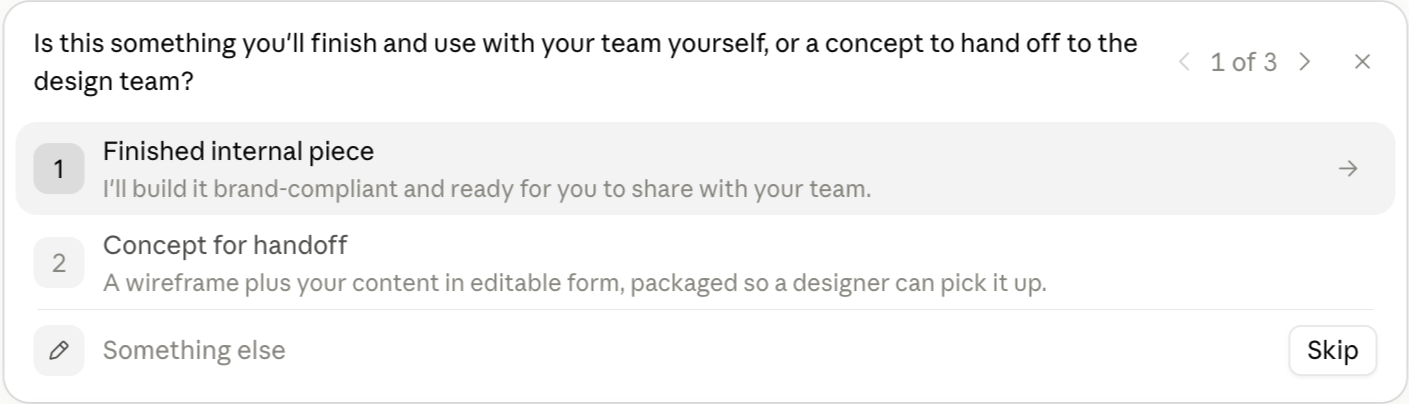
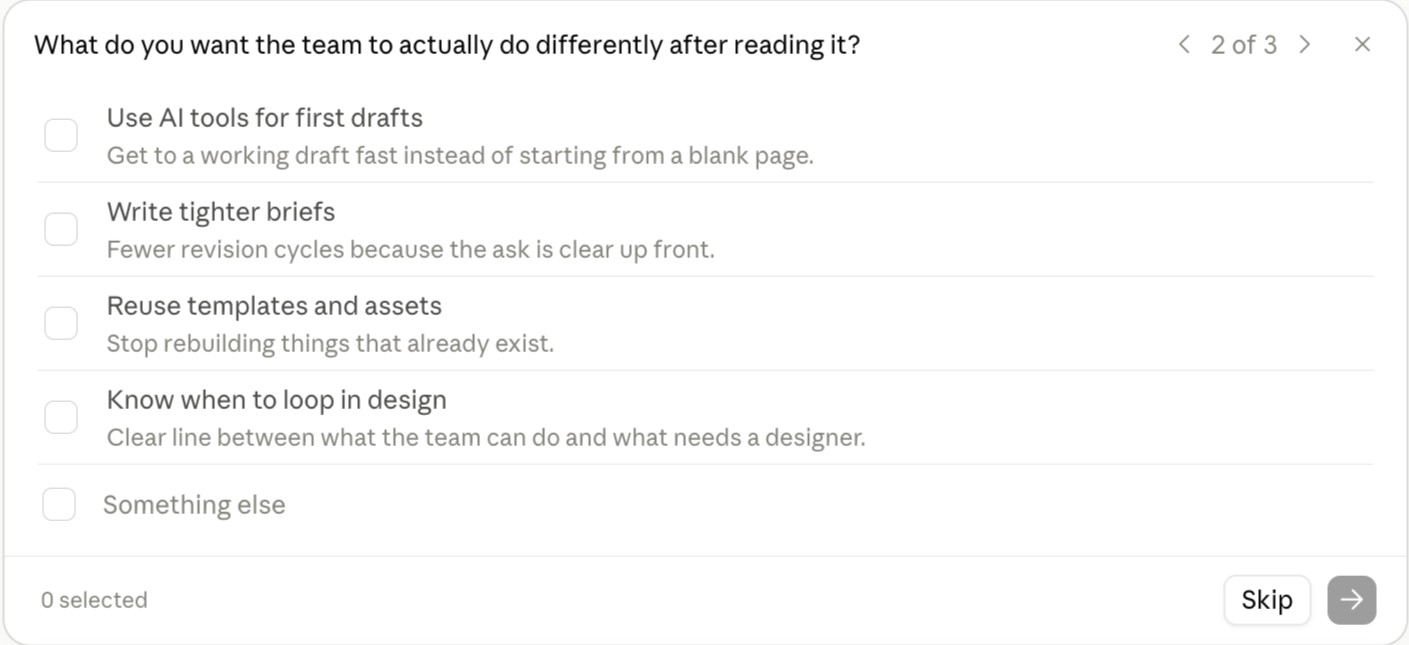
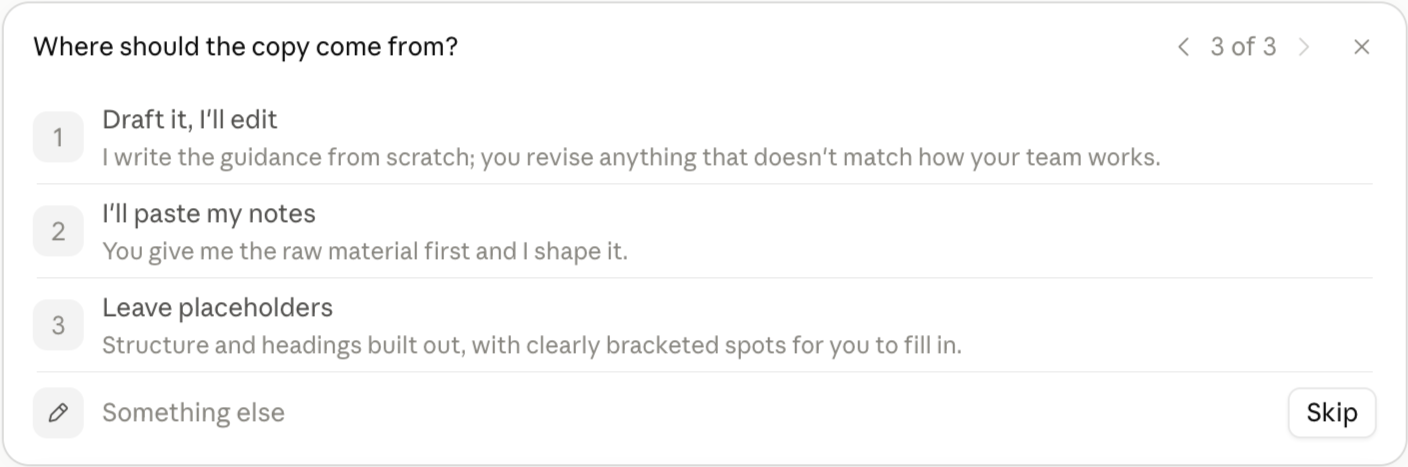
Once the system understands the request, it determines the right path forward.
Internal work moves into Draft Mode for a usable, brand-aligned deliverable. External-facing work moves into Wireframe Mode, where the system prepares the content, structure, and creative brief for Design.
DRAFT MODE?
Brand-aligned output doesn't happen by asking AI to “follow the brand.”
We translated our visual style guide into a coded design system the tool could actually use, defining how typography, color, hierarchy, spacing, layout, and brand elements behave across different outputs. Then we tested and refined the system until Draft Mode could reliably turn everyday internal requests into usable, brand-aligned materials.
The goal wasn't to automate great design. It was to engineer a better baseline.
Internal teams get something they can use for that morning team meeting.
Designers get something they can build from.
The brand puts its best foot forward.
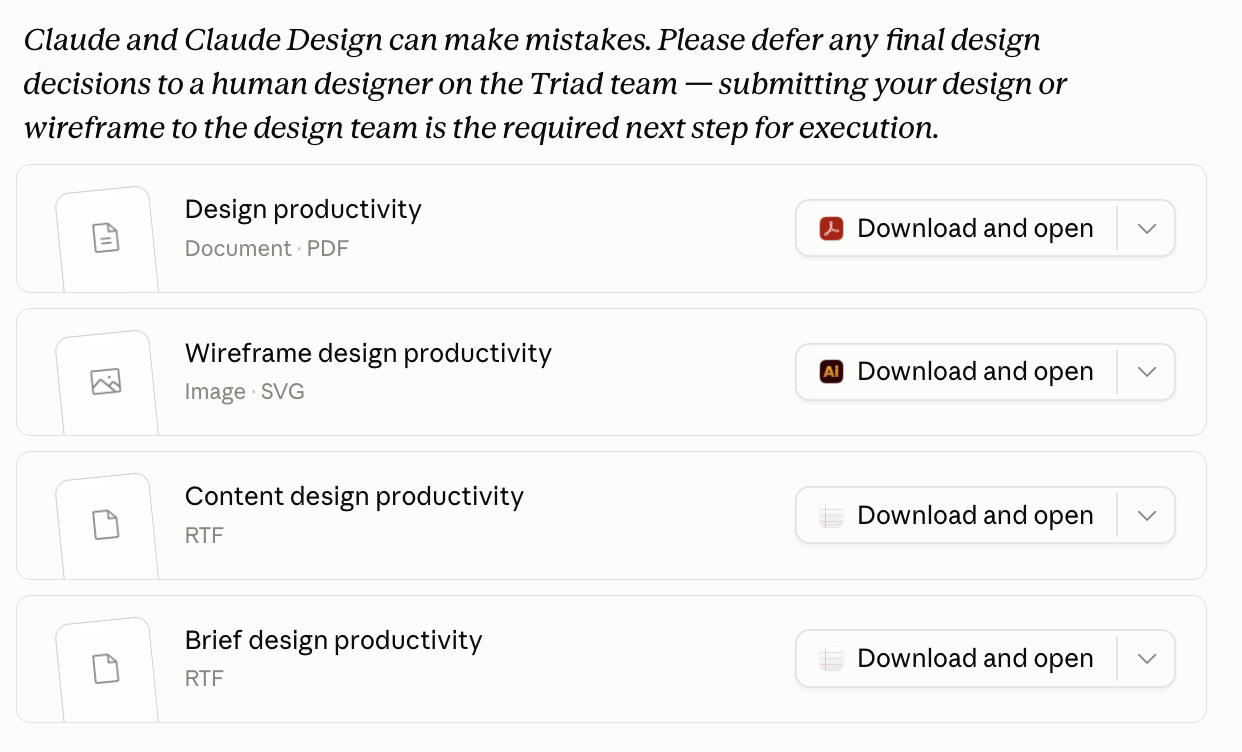
ONE REQUEST, MULTIPLE USEFUL OUTPUTS
One request becomes everything the next person needs.
Design
Wireframe
→
→
Content
Creative Brief
→
→
RAISE THE FLOOR.
PROTECT THE CEILING.
SHARED FRAMEWORK → BETTER COMMUNICATION → MORE ROOM FOR CREATIVITY → ELITE CREATIVE OUTCOMES
The system was designed to raise the baseline for everyday creative work, not replace the expertise that produces exceptional work.
AI handles the repeatable structure. Human judgment stays where it matters most.